


As the popularity of GLP-1 drugs continues to climb, significant weight loss associated with the medications has been linked to a growing list of cosmetic concerns.
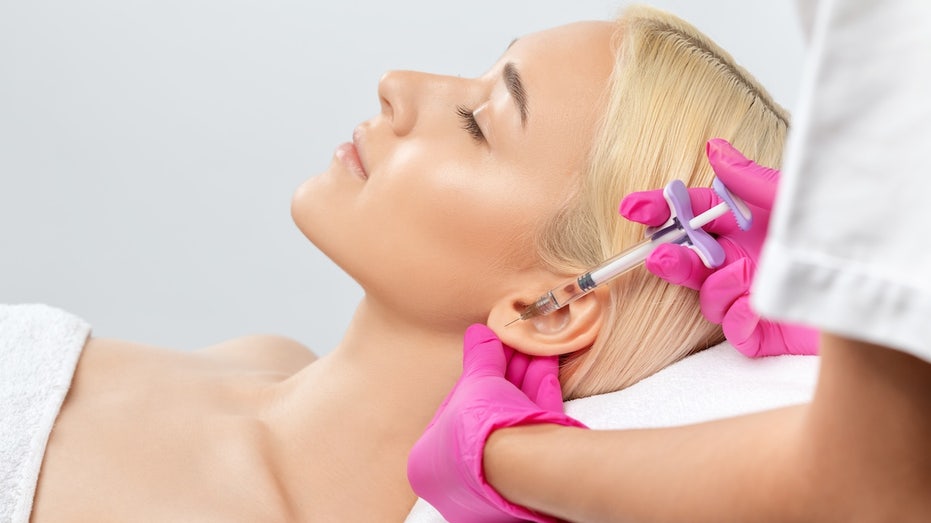
Some surgeons report that more patients are seeking treatments for so-called “Ozempic earlobes,” which reportedly appear thinner, longer or more sagging after the loss of facial fat.
“The use of semaglutides causes you to lose fat across your body, including the small, fat pads of the earlobes,” facial plastic surgeon Sachin S. Parikh, MD, told New Beauty.
OZEMPIC, OTHER SEMAGLUTIDES LINKED TO HAIR LOSS: HERE’S WHAT TO KNOW
“It’s important to note that semaglutides do not damage ear tissue or affect hearing in any way, so any intervention would be purely cosmetic,” added the California-based doctor.
Some of the potential treatments for “Ozempic earlobes” may include dermal filler, fat transfer, laser treatments or surgical earlobe reduction, according to the report.
Dr. Mohammed Asif from Duly Health and Care in Naperville, Illinois, said that while he hasn’t personally noticed an uptick in ear surgeries, he has seen a rise in other procedures due to GLP-1-triggered weight loss.
Some of those include panniculectomies (Ozempic skin removal surgery) and abdominoplasties (tummy tucks).
PLASTIC SURGERY TRENDS TAKE A SURPRISING TURN, AS DOCTORS SEE MORE PATIENTS ‘SIZING DOWN’
“There has been a significant increase in body contouring procedures among patients with GLP-1 weight loss,” Asif told Fox News Digital.
“In my practice, I’ve seen a significant surge in breast lifts, panniculectomies (skin removal surgery), abdominoplasties (tummy tucks), brachioplasties (arm lifts) and thighplasties due to weight loss.”
TOP COSMETIC PROCEDURES REVEALED IN NEW REPORT: WHAT’S TRENDING AND WHY
Healing and recovery is “far greater and less complicated” than with bariatric surgery weight loss, Asif noted.
“This is due to the gradual weight loss achieved over time with GLP-1s.”
“Ozempic breast” is another common complaint, according to Dr. Michael Omidi, a double board-certified plastic surgeon practicing in Beverly Hills.
“Women in their 30s and 40s would not typically need a breast lift, but when you’re taking drugs like Ozempic or Wegovy that cause rapid weight loss, women can see gravity take its toll on their breasts,” he told Fox News Digital.
“When women, especially younger ones, lose fat too fast, it causes the breasts, which are comprised of fat, glandular tissue and skin, to lose volume,” he went on. “The skin and supporting ligaments don’t always bouce back at the same rate as the weight loss, resulting in breasts that can appear saggy and deflated.”
NEW OBESITY TREATMENT MAY HELP PRESERVE MUSCLE DURING WEIGHT LOSS
Dr. Samuel Golpanian, a double board-certified plastic surgeon in Beverly Hills, said he has seen “dozens” of patients – men and women alike – seeking treatments for so-called “Ozempic butt” after significant weight loss.
“This is an unintended consequence of taking GLP-1s,” he told Fox News Digital.
“Such dramatic weight loss in a short period of time causes the skin not to tighten quickly enough to keep up with the body’s changes. Our buttocks have a large amount of fat, so when that volume disappears quickly, you’ll develop a flatter, saggier behind.”
Kristy Hamilton, MD, a Houston-based surgeon who is a member of the American Society of Plastic Surgeons (ASPS), agreed that a growing number of patients are seeking skin-tightening procedures after losing large amounts of weight with GLP-1s.
“We’re absolutely seeing more of those patients, and I expect that trend to continue,” said Hamilton in an ASPS report.
CLICK HERE FOR MORE HEALTH STORIES
“People are losing as much as 100 pounds on this medication – and when you’re losing that amount, that’s significant. You’re certainly going to have excess skin afterward.”
The ASPS lists the following body-contouring procedures as the ones most frequently performed after substantial weight loss.
CLICK HERE TO SIGN UP FOR OUR HEALTH NEWSLETTER
Experts say adequate protein intake and resistance training can help minimize the loss of lean muscle mass that often accompanies rapid weight loss, which could reduce some of the cosmetic concerns.
Goldpain also emphasized the importance of eating enough protein.
TEST YOURSELF WITH OUR LATEST LIFESTYLE QUIZ
“It can be harder since your appetite is suppressed, but it’s so important to consume at least 110 grams of protein a day while taking a GLP-1 drug,” he advised.
“Also, I say this to my patients all the time: You have to lift weights to keep your muscles from atrophying. Strength training can help build muscles and preserve your glutes.”